Discover how this innovative Korean blotech company is trasnforming waste into high-value resources by achiving unprecedented purity levels in recycled plastics.
Over 7 billion tons of plastic waste have accumulated across our oceans and land globally, with an additional 500 million tons being produced each year. From the morning coffee we grab on our commute to the convenient bottled water and food delivery packaging we use daily, it’s nearly impossible to imagine life without plastic. However, the environmental cost of this convenience has reached a critical point.
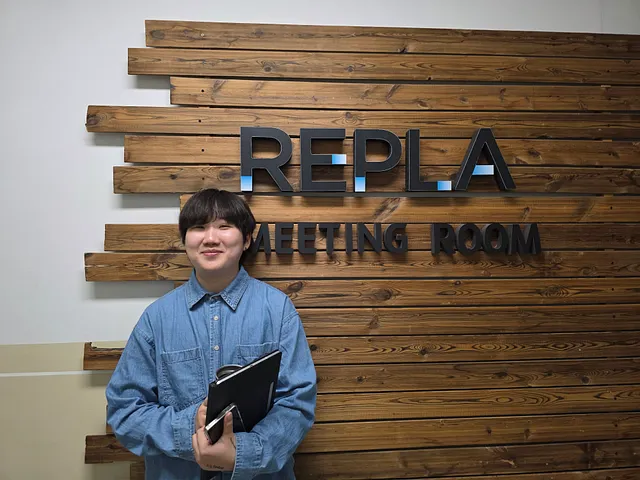
But what if this crisis could be transformed into an opportunity — one that turns waste into valuable resources? That’s exactly what one young Korean entrepreneur has accomplished after dedicating nearly a decade to solving this challenge. Meet Dong-eun Suh, CEO of South Korean biotech company REPLA, who’s making waves globally with groundbreaking technology that uses “Selective Degradation Bacteria” to dramatically increase the purity of recycled plastics.
The Spark: From High School Project to Plastic Revolution
REPLA’s journey began when Suh participated in a high school science competition focused on “urban mining” — extracting and recycling metals from urban waste, similar to mining gold from traditional mines. While researching with her team, Suh noticed something crucial: while metal extraction technologies had largely overcome their technical hurdles, plastic recycling still faced numerous challenges. The biggest obstacle? The mixing of different plastic types.
“Plastic isn’t just one material — it comes in many different types,” explains Suh. “To produce high-quality recycled products, you need a single type when melting it down. But since different plastics get mixed together during disposal, separating them by type is incredibly difficult, which means most end up being incinerated rather than recycled.”
Learning from the Front Lines
The people who felt this mixed-material problem most acutely were recycling plant owners themselves. After discovering through academic research that these plant owners were actively involved in technology development, Suh decided to reach out directly.
“Research itself wasn’t our primary goal — business was,” says Suh. “So we personally interviewed over 200 recycling plant owners. We found the Ministry of Environment’s database of recycling facilities and just started making calls. If we got rejected, we’d show up at their factories for meetings. We also traveled to recycling plants abroad in the US, Europe, Thailand, Japan, and China. We made it a point to meet with potential customers at least every two or three days.”
Despite their young age, the REPLA team wasn’t just a group of naive enthusiasts captivated by an interesting idea. From the pre-startup phase, they carefully listened to potential customers and thoroughly assessed market viability. Their diligence in visiting recycling operations around the world whenever possible gave them invaluable insights into the real problems facing the industry.
“One of the recycling plant owner compared their work of sorting plastic to peeling apples,” Suh recalls. “They wanted to sell apples after peel them perfectly, and supply just the delicious parts. But without the right technology, they had to peel too thickly and could only sell about 10% of the good stuff.”
“What these owners wanted was simple: higher-purity raw materials they could sell at better prices with greater stability. They told us they’d invest whatever was needed if quality could be significantly improved. Many had already spent millions (KRW) on expensive equipment only to be disappointed, so they asked us to not just make the equipment but also handle installation and maintenance.”
Boosting Plastic Value Through Purity: The Answer Lies in a ‘Selective Degradation Bacteria’
After nine years of dedicated research, REPLA has successfully developed a breakthrough solution that transforms low-value recycled plastic into high-value material with higher purity. The key to this breakthrough was found in ‘Selective Degradation Bacteria.’
“Our motto wasn’t ‘break everything down’ but rather ‘leave the right things behind,’” explains Suh. “Materials like PET are relatively easy to degrade or are well-broken down by bacteria, so we focused on PE and PP, which are much trickier to separate. In our research, we discovered that bacteria found in mealworm intestines break down PE more easily than PP and barely react with PP at all. It was a perfect alignment of research opportunity and business potential.”
Despite her modest description of it as a “chance discovery,” REPLA has built an extensive library of 300 different bacteria and continues to deepen their research by exploring potential bacteria discovery sites like landfills. This level of dedication is what opened new possibilities in plastic recycling.
The ability to convert low-value plastics into high-purity feedstock is crucial in meeting evolving global regulations and opening access to premium recycling markets. “After 2018, China created regulations requiring imported plastic waste to be at least 99.5% of a single material type, with impurities below 0.5%,” Suh explains. “REPLA’s technology exceeds these strict global regulatory requirements. When our technology is commercialized, more plastics will be recycled rather than ending up in landfills or incinerators.”
When commercialized, REPLA’s technology is expected to significantly boost material recycling rates across the plastic industry. Unlike competitors’ chemical recycling methods — which often generate dioxins during degradation — or thermal recycling approaches for PE and PP plastics that have seen limited success, REPLA’s biological approach operates at room temperature (25–30°C) rather than requiring extreme heat. This ambient temperature process substantially reduces energy consumption, making it remarkably effective at cutting carbon emissions while avoiding the environmental hazards associated with high-temperature or chemical methods.It is a truly eco-friendly approach to waste management.
REPLA’s Product Ecosystem: Solving Real Problems
“REPLA has three criteria for all decision-making,” says Suh. “Is this a problem customers desperately want solved? Does the economic value also create positive social impact? And is it meaningful in the long term? Our goal isn’t revenue but solving our customers’ real problems. All our main product lines were developed with these criteria in mind.”
Based on extensive field research, REPLA has brought three major product lines to market, offering comprehensive industrial plastic recycling solutions:
BioTank: The Core Purification System
This equipment is designed to purify low-grade PP by removing impurities such as PE using specialized bacteria, effectively upgrading it to high-purity PP. REPLA offers full turnkey solutions — including equipment sales, installation, and maintenance — to minimize operator workload. A facility with an annual capacity of 10,000 tons can expect the following benefits:
- 1.5x increase in sales price through improved material quality
- Approximately $2.7 million in additional annual profit
- Access to high-value markets that demand higher purity
- Cost savings from processing contaminated materials that were previously unusable
PuriChecker: Real-time Quality Assurance
This device quickly identifies impurities in recycled plastic and measures purity, allowing operators to make immediate decisions about material processing and quality control. REPLA developed this solution at about $23,000, compared to existing equipment costing around $150,000, significantly reducing customer costs while improving quality control.
PlaScan: Handheld Material Identifier
This portable plastic scanner allows immediate identification of plastic materials in the field. Its lightweight, handheld design has received high satisfaction from workers.
At CES 2024, REPLA was honored with two Innovation Awards in the categories of ‘Product in Support of Human Security and Sustainability’, ‘Eco-Design & Smart Energy’. The recognition highlights REPLA’s role in improving worker safety and sustainability by replacing the once-common, hazardous method of identifying plastic types through burning and smelling with a safer and smarter solution — another achievement for green plastic technology.
Global Expansion and Future Vision
REPLA has successfully completed validation testing at their in-house research laboratory and is now actively recruiting Proof-of-Concept partners as they prepare to establish a demonstration plant. Rather than disrupting existing recycling operations, REPLA is taking a collaborative approach — working alongside industry partners to enhance quality and create mutual benefits throughout the circular economy plastic ecosystem. Their innovative process aims to transform plastics that currently fail to meet quality standards (and would otherwise be incinerated) into high-quality recycled PP.
The demonstration plant, scheduled for acquisition in 2025, is projected to reach full operational capacity by 2027, producing 43 tons of recycled PP daily — translating to 15,000 tons of high-purity recycled PP annually. To achieve this ambitious scale-up, REPLA has already developed a prototype capable of processing 10 kilograms per day. By the second half of 2025, they plan to have a pilot system operational that can process one ton daily. Looking ahead to 2026, the company is focused on creating equipment capable of handling 30 tons per day, steadily progressing toward full-scale production of their industrial plastic recycling solutions.
Beginning in 2027, REPLA aims to produce a minimum of 15,000 tons of high-quality recycled plastic annually, targeting revenue exceeding 23.7 billion KRW (approximately $18 million USD). Even before their full-scale PoC begins, the global market response has been enthusiastic.
“We’re currently in discussions with recycling companies in Finland, Italy, and Spain about implementing our BioTank technology,” says CEO Dong-eun Suh. “We’ve already established a branch in Germany and sent staff there. Europe is particularly attractive for us because of its strong environmental regulations, robust capital flow, and quick decision-making processes.”
When asked about expanding beyond global markets into new business territories, Suh shared REPLA’s blueprint for the future:
“After establishing ourselves in the PP market, we plan to gradually expand into other plastic materials like polycarbonate. Our long-term vision is to grow into a comprehensive bio-platform company that processes organic waste — including discarded textiles — by leveraging our bacterial and enzymatic technologies, advancing green plastic technology and supporting the circular economy plastic model.”
The Power of Persistence: "If We Fail, Anyone Who Tries Will Fail"
“Many said this kind of research would take at least 10 years — possibly 20 in a worst-case scenario,” Suh reflects. “It was really tough to hold on without revenue.”
What motivated her to pour nearly a decade into research with unpredictable chances of success? When asked, she smiles thoughtfully, noting it’s a question she hears often.
“I kept going with the mindset that if we failed, anyone who tried would fail too. I continued as long as I couldn’t accept the reasons for failure. Deep down, I had this feeling that ‘this could work.’ If I had genuinely accepted that it was impossible, I would have been traveling around explaining why commercializing plastic degradation couldn’t be done.”
Suh persevered by reflecting on the reasons behind each failure — motivated by customers who eagerly awaited the technology, and guided by experts who offered support with no strings attached.
“I’m truly grateful to the business owners who provided ideas and encouragement, and to the many experts who offered valuable advice without expecting anything in return,” she says. “Going forward, we’ll continue to place our company’s reason for existence in ‘customer needs,’ and all our team members will do their best as ‘means’ to solve problems.”
REPLA has presented an innovative solution to the challenge of plastic recycling through “Selective Degradation Bacteria.” Their patented technology and customer-centered philosophy promise to create a more eco-friendly future for plastic waste management.
REPLA's Competitive Edge in the Plastic Recycling Industry
- Ultra purity degradation technology: REPLA has developed and registered six bacterial strains that selectively degrade specific plastics, achieving high purity for target plastics like PP.
- Global regulatory compliance: Their technology exceeds stringent global standards like China’s 99.5% purity requirement, supporting customers in producing stable products eligible for export.
- Customer-driven innovation: From the beginning, they’ve communicated directly with over 200 recycling facilities, thoroughly understanding actual customer needs and rigorously incorporating these into their technology and product development.
- Commercialization momentum: With recent Series A investment of KRW 8 Billion (approximately USD 5.8 million), they’re establishing a demonstration factory scaled to produce 15,000 tons annually. This facility will convert previously difficult-to-recycle mixed-material plastics into high-purity raw materials, allowing recycling plants to expect 1.5x revenue increases and reduced disposal costs
- Sustainable business model: REPLA contributes to environmental problem-solving through plastic recycling rates while securing economic viability by enhancing the value of recycled materials, supporting the circular economy plastic model.
Want to learn more about how REPLA is revolutionizing plastic recycling with bacterial technology?
- Visit REPLA’s official website to learn in detail how their “Selective Degradation Bacteria” technology and BioTank solution increase plastic recycling purity.
- Connect with CEO Dong-eun Suh on LinkedIn to gain insights about REPLA’s vision and the future of the plastic recycling industry.
- Reach out to Beomkyu Choi, Investment Manager at Sopoong Connect on LinkedIn to learn about investment opportunities.
What plastic waste problems and recycling challenges does your organization or community face, and how might REPLA’s high-purity recycling solution contribute to solving them? Share your thoughts in the comments below.
출처
Cloe Jiyeon Hong, 「REPLA's Game-Changing Bacteria Turn Waste into High-Value Plastics」, Medium
https://medium.com/k-startup/k-startup-interview-series-replas-game-changing-bacteria-turn-waste-into-high-value-plastics-a92d9572c1bb





Over 7 billion tons of plastic waste have accumulated across our oceans and land globally, with an additional 500 million tons being produced each year. From the morning coffee we grab on our commute to the convenient bottled water and food delivery packaging we use daily, it’s nearly impossible to imagine life without plastic. However, the environmental cost of this convenience has reached a critical point.
But what if this crisis could be transformed into an opportunity — one that turns waste into valuable resources? That’s exactly what one young Korean entrepreneur has accomplished after dedicating nearly a decade to solving this challenge. Meet Dong-eun Suh, CEO of South Korean biotech company REPLA, who’s making waves globally with groundbreaking technology that uses “Selective Degradation Bacteria” to dramatically increase the purity of recycled plastics.
The Spark: From High School Project to Plastic Revolution
REPLA’s journey began when Suh participated in a high school science competition focused on “urban mining” — extracting and recycling metals from urban waste, similar to mining gold from traditional mines. While researching with her team, Suh noticed something crucial: while metal extraction technologies had largely overcome their technical hurdles, plastic recycling still faced numerous challenges. The biggest obstacle? The mixing of different plastic types.
“Plastic isn’t just one material — it comes in many different types,” explains Suh. “To produce high-quality recycled products, you need a single type when melting it down. But since different plastics get mixed together during disposal, separating them by type is incredibly difficult, which means most end up being incinerated rather than recycled.”
Learning from the Front Lines
The people who felt this mixed-material problem most acutely were recycling plant owners themselves. After discovering through academic research that these plant owners were actively involved in technology development, Suh decided to reach out directly.
“Research itself wasn’t our primary goal — business was,” says Suh. “So we personally interviewed over 200 recycling plant owners. We found the Ministry of Environment’s database of recycling facilities and just started making calls. If we got rejected, we’d show up at their factories for meetings. We also traveled to recycling plants abroad in the US, Europe, Thailand, Japan, and China. We made it a point to meet with potential customers at least every two or three days.”
Despite their young age, the REPLA team wasn’t just a group of naive enthusiasts captivated by an interesting idea. From the pre-startup phase, they carefully listened to potential customers and thoroughly assessed market viability. Their diligence in visiting recycling operations around the world whenever possible gave them invaluable insights into the real problems facing the industry.
“One of the recycling plant owner compared their work of sorting plastic to peeling apples,” Suh recalls. “They wanted to sell apples after peel them perfectly, and supply just the delicious parts. But without the right technology, they had to peel too thickly and could only sell about 10% of the good stuff.”
“What these owners wanted was simple: higher-purity raw materials they could sell at better prices with greater stability. They told us they’d invest whatever was needed if quality could be significantly improved. Many had already spent millions (KRW) on expensive equipment only to be disappointed, so they asked us to not just make the equipment but also handle installation and maintenance.”
Boosting Plastic Value Through Purity: The Answer Lies in a ‘Selective Degradation Bacteria’
After nine years of dedicated research, REPLA has successfully developed a breakthrough solution that transforms low-value recycled plastic into high-value material with higher purity. The key to this breakthrough was found in ‘Selective Degradation Bacteria.’
“Our motto wasn’t ‘break everything down’ but rather ‘leave the right things behind,’” explains Suh. “Materials like PET are relatively easy to degrade or are well-broken down by bacteria, so we focused on PE and PP, which are much trickier to separate. In our research, we discovered that bacteria found in mealworm intestines break down PE more easily than PP and barely react with PP at all. It was a perfect alignment of research opportunity and business potential.”
Despite her modest description of it as a “chance discovery,” REPLA has built an extensive library of 300 different bacteria and continues to deepen their research by exploring potential bacteria discovery sites like landfills. This level of dedication is what opened new possibilities in plastic recycling.
The ability to convert low-value plastics into high-purity feedstock is crucial in meeting evolving global regulations and opening access to premium recycling markets. “After 2018, China created regulations requiring imported plastic waste to be at least 99.5% of a single material type, with impurities below 0.5%,” Suh explains. “REPLA’s technology exceeds these strict global regulatory requirements. When our technology is commercialized, more plastics will be recycled rather than ending up in landfills or incinerators.”
When commercialized, REPLA’s technology is expected to significantly boost material recycling rates across the plastic industry. Unlike competitors’ chemical recycling methods — which often generate dioxins during degradation — or thermal recycling approaches for PE and PP plastics that have seen limited success, REPLA’s biological approach operates at room temperature (25–30°C) rather than requiring extreme heat. This ambient temperature process substantially reduces energy consumption, making it remarkably effective at cutting carbon emissions while avoiding the environmental hazards associated with high-temperature or chemical methods.It is a truly eco-friendly approach to waste management.
REPLA’s Product Ecosystem: Solving Real Problems
“REPLA has three criteria for all decision-making,” says Suh. “Is this a problem customers desperately want solved? Does the economic value also create positive social impact? And is it meaningful in the long term? Our goal isn’t revenue but solving our customers’ real problems. All our main product lines were developed with these criteria in mind.”
Based on extensive field research, REPLA has brought three major product lines to market, offering comprehensive industrial plastic recycling solutions:
BioTank: The Core Purification System
This equipment is designed to purify low-grade PP by removing impurities such as PE using specialized bacteria, effectively upgrading it to high-purity PP. REPLA offers full turnkey solutions — including equipment sales, installation, and maintenance — to minimize operator workload. A facility with an annual capacity of 10,000 tons can expect the following benefits:
PuriChecker: Real-time Quality Assurance
This device quickly identifies impurities in recycled plastic and measures purity, allowing operators to make immediate decisions about material processing and quality control. REPLA developed this solution at about $23,000, compared to existing equipment costing around $150,000, significantly reducing customer costs while improving quality control.
PlaScan: Handheld Material Identifier
This portable plastic scanner allows immediate identification of plastic materials in the field. Its lightweight, handheld design has received high satisfaction from workers.
At CES 2024, REPLA was honored with two Innovation Awards in the categories of ‘Product in Support of Human Security and Sustainability’, ‘Eco-Design & Smart Energy’. The recognition highlights REPLA’s role in improving worker safety and sustainability by replacing the once-common, hazardous method of identifying plastic types through burning and smelling with a safer and smarter solution — another achievement for green plastic technology.
Global Expansion and Future Vision
REPLA has successfully completed validation testing at their in-house research laboratory and is now actively recruiting Proof-of-Concept partners as they prepare to establish a demonstration plant. Rather than disrupting existing recycling operations, REPLA is taking a collaborative approach — working alongside industry partners to enhance quality and create mutual benefits throughout the circular economy plastic ecosystem. Their innovative process aims to transform plastics that currently fail to meet quality standards (and would otherwise be incinerated) into high-quality recycled PP.
The demonstration plant, scheduled for acquisition in 2025, is projected to reach full operational capacity by 2027, producing 43 tons of recycled PP daily — translating to 15,000 tons of high-purity recycled PP annually. To achieve this ambitious scale-up, REPLA has already developed a prototype capable of processing 10 kilograms per day. By the second half of 2025, they plan to have a pilot system operational that can process one ton daily. Looking ahead to 2026, the company is focused on creating equipment capable of handling 30 tons per day, steadily progressing toward full-scale production of their industrial plastic recycling solutions.
Beginning in 2027, REPLA aims to produce a minimum of 15,000 tons of high-quality recycled plastic annually, targeting revenue exceeding 23.7 billion KRW (approximately $18 million USD). Even before their full-scale PoC begins, the global market response has been enthusiastic.
“We’re currently in discussions with recycling companies in Finland, Italy, and Spain about implementing our BioTank technology,” says CEO Dong-eun Suh. “We’ve already established a branch in Germany and sent staff there. Europe is particularly attractive for us because of its strong environmental regulations, robust capital flow, and quick decision-making processes.”
When asked about expanding beyond global markets into new business territories, Suh shared REPLA’s blueprint for the future:
“After establishing ourselves in the PP market, we plan to gradually expand into other plastic materials like polycarbonate. Our long-term vision is to grow into a comprehensive bio-platform company that processes organic waste — including discarded textiles — by leveraging our bacterial and enzymatic technologies, advancing green plastic technology and supporting the circular economy plastic model.”
The Power of Persistence: "If We Fail, Anyone Who Tries Will Fail"
“Many said this kind of research would take at least 10 years — possibly 20 in a worst-case scenario,” Suh reflects. “It was really tough to hold on without revenue.”
What motivated her to pour nearly a decade into research with unpredictable chances of success? When asked, she smiles thoughtfully, noting it’s a question she hears often.
“I kept going with the mindset that if we failed, anyone who tried would fail too. I continued as long as I couldn’t accept the reasons for failure. Deep down, I had this feeling that ‘this could work.’ If I had genuinely accepted that it was impossible, I would have been traveling around explaining why commercializing plastic degradation couldn’t be done.”
Suh persevered by reflecting on the reasons behind each failure — motivated by customers who eagerly awaited the technology, and guided by experts who offered support with no strings attached.
“I’m truly grateful to the business owners who provided ideas and encouragement, and to the many experts who offered valuable advice without expecting anything in return,” she says. “Going forward, we’ll continue to place our company’s reason for existence in ‘customer needs,’ and all our team members will do their best as ‘means’ to solve problems.”
REPLA has presented an innovative solution to the challenge of plastic recycling through “Selective Degradation Bacteria.” Their patented technology and customer-centered philosophy promise to create a more eco-friendly future for plastic waste management.
REPLA's Competitive Edge in the Plastic Recycling Industry
Want to learn more about how REPLA is revolutionizing plastic recycling with bacterial technology?
What plastic waste problems and recycling challenges does your organization or community face, and how might REPLA’s high-purity recycling solution contribute to solving them? Share your thoughts in the comments below.
출처
Cloe Jiyeon Hong, 「REPLA's Game-Changing Bacteria Turn Waste into High-Value Plastics」, Medium
https://medium.com/k-startup/k-startup-interview-series-replas-game-changing-bacteria-turn-waste-into-high-value-plastics-a92d9572c1bb